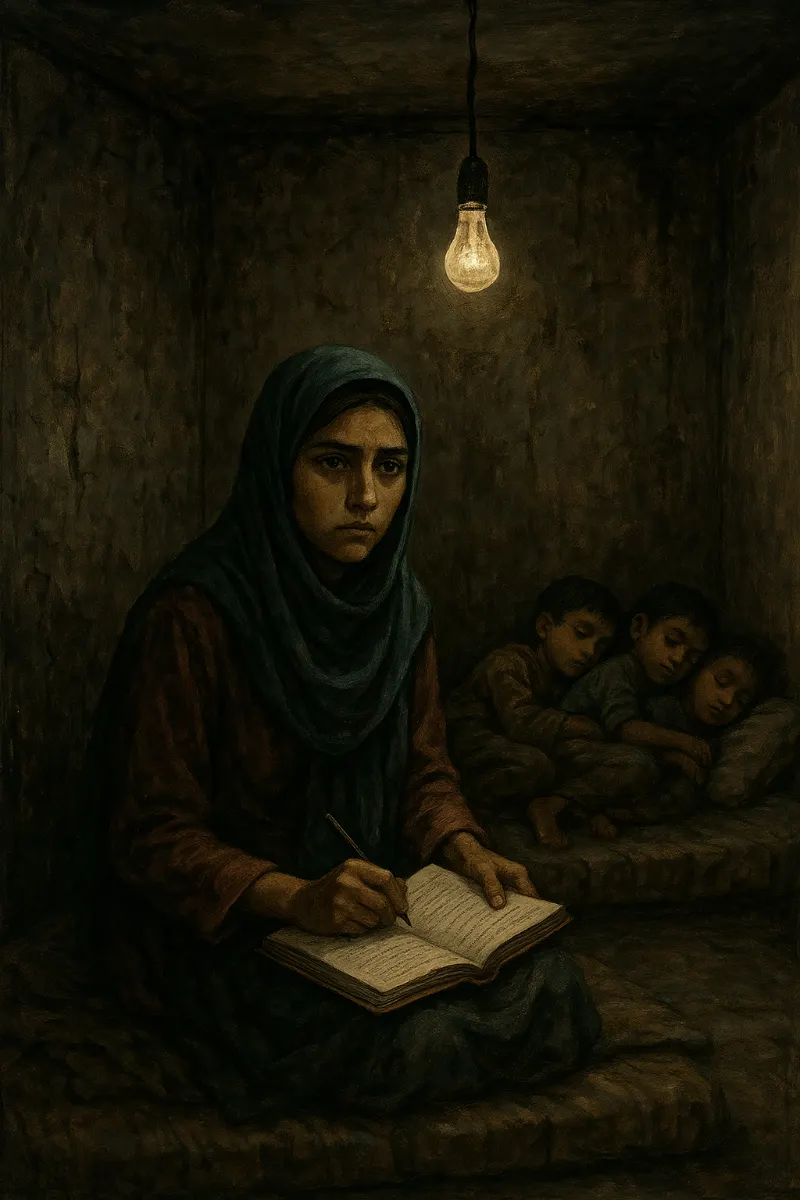
In a small village, there lived a boy named Robiul. He was a meritorious and hardworking student. His family was very poor. Robiul’s father worked hard every day as a rickshaw puller, while his mother stayed at home, taking care of the family. They had to suffer a lot just to run the family. Still, they tried to live peacefully with whatever little they had. Their house was small and made of rusted tin sheets. The floor was made of mud, uneven and cold to walk on. There was no proper furniture inside, only a broken wooden cot where Robiul’s parents slept .In one corner stood an old wooden trunk where they kept their clothes. Robiul had a tiny room of his own. There was almost nothing inside it, only a thin mat spread on the mud floor where he used to sleep. The walls were made of tin, and when the wind blew, they rattled softly through the night. Beside his room, there was a small space that served as the kitchen. His mother cooked with firewood, as they couldn’t afford a gas stove. The walls were blackened with smoke, and the smell of burnt wood always hung in the air. Every morning, she sat on a low stool near the earthen stove, blowing gently through a pipe to keep the fire alive. She cooked rice, lentils, and sometimes mashed potatoes or vegetables when they could afford them. The utensils were a few tin plates, a small pot, and a kettle. During the rainy season, drops of water used to fall through the holes in the roof, wetting their beds and clothes. One night, it rained heavily, and the stormy wind shook the tin walls. Water leaked from every corner of the ceiling, and they had to move their things to the driest spot they could find. The floor was damp, and the sound of raindrops hitting the tin roof echoed through the night. Robiul’s mother sat awake, holding a small lamp, while his father tried to stop the leaks. They all remained sleepless that night, shivering in the cold but praying for the rain to stop.
Despite facing so many hardships, he managed to complete his primary education. Now he was studying in class eight, but it had become increasingly difficult for his father to bear his educational expenses with the little money he earned from pulling a rickshaw. Now he was studying in class eight, but it had become increasingly difficult for his father to bear his educational expenses with the little money he earned from pulling a rickshaw. At school, Robiul always tried to stay cheerful and focused, but deep down, he often felt different from others. His uniform had faded from being washed too many times, and his shoes were torn at the edges. One afternoon, while standing in the schoolyard, a few of his classmates noticed his worn-out clothes and started whispering and laughing.
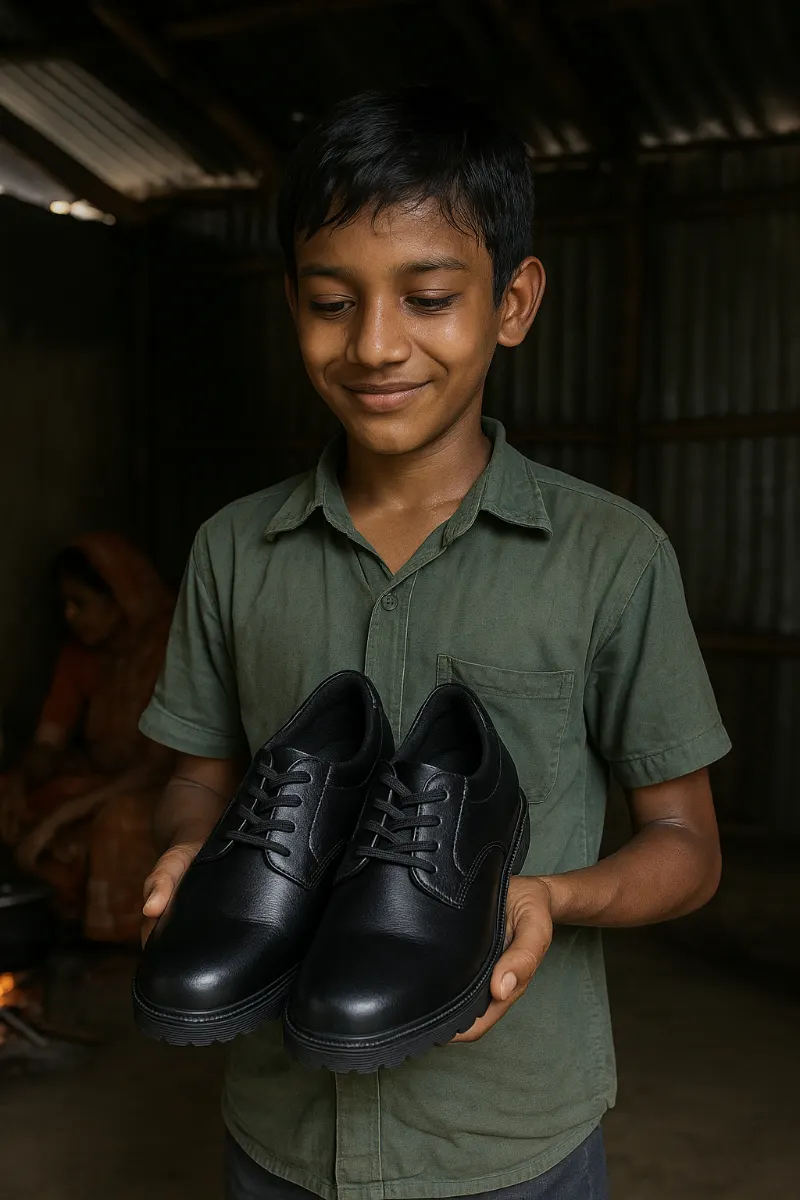
Robiul tried to smile and ignore their words, but his heart ached. He lowered his eyes and quietly walked away, pretending not to care. That day, even when the teacher praised him for his good results, he couldn’t feel happy. The laughter of his classmates kept echoing in his mind. That evening, when he came home, his mother noticed the sadness on his face. She asked softly, “What happened, Robiul? Did something go wrong at school?”At first, he shook his head and said nothing. But when his mother kept insisting, his eyes filled with tears, and he finally told her everything. She listened silently, her heart breaking for her son. At that moment, his father returned home and overheard their conversation. He didn’t say a word, just looked at Robiul quietly, his face filled with pain and determination. The next day, when Robiul woke up, he saw a new pair of shoes placed beside his mat. He couldn’t believe his eyes. He looked at his father, who was sitting in the corner, his clothes still damp with sweat and his eyes tired from a sleepless night.
Only then did Robiul understand his father had worked late into the night, pulling his rickshaw for extra hours just to buy those shoes. Holding them close, Robiul felt a lump in his throat. He realized that every little thing he had came from his parents’ sacrifice. He hugged his father tightly and whispered, “Baba, I’ll never let your hard work go in vain. The next day, Robiul wore his new shoes to school. He didn’t have any friends, so he stood quietly by himself, watching the classroom. Suddenly, one of his classmates’ parents came, holding a brand-new bicycle for their child. The classmate’s eyes lit up at first, but then his face twisted in anger.“I don’t like this color! I don’t want this bicycle!” he shouted, pushing it away. The parents looked surprised and a little hurt, trying to explain, but he refused to listen. Robiul stood there, quietly observing. He thought to himself, How strange… he has everything, a shiny bicycle, proper food, toys, and clothes, and yet he is still unhappy. Then, Robiul looked down at his own simple shoes and remembered how his father had worked all night to buy them, sweating and tired, just to see him happy. A warm feeling rose in his chest. If a pair of cheap shoes could make me this happy, how much more love and care must my parents be giving every single day?
For the first time, Robiul truly understood the value of sacrifice and gratitude. He smiled to himself quietly, feeling content and proud, knowing that happiness did not come from having everything, but from love, effort, and appreciation. When Robiul was younger, he didn’t understand what his father was going through. But now that he had grown up, he could see the pain and hardship his parents faced every day. His father used to come home late at night, covered in sweat and dust after a long day of pulling his rickshaw. For dinner, he would eat only plain rice with some simple vegetables, and sometimes just rice alone. He never got enough rest early in the morning. Before the sun rose, he would wake up and go out again to work. When I was a child, I never truly understood what my father went through every day. But as I grew older, the truth slowly unfolded before my eyes. Every night, I would see him return home late, his clothes soaked in sweat, his hands rough from pulling the rickshaw all day. He would sit down silently, too tired to even talk, and eat his dinner just plain rice with a bit of vegetable, and sometimes nothing but rice. I remember watching him eat and feeling a tightness in my chest.
He barely had time to rest. Before dawn, when the village was still wrapped in sleep, he would wake up again and leave quietly for work. I used to hear the creak of the rickshaw wheels fading into the distance and wonder how much longer he could go on like this. Only then did I realize how much pain and sacrifice were hidden behind his tired smile. One evening, as Robiul watched his father return home exhausted, he made a quiet promise to himself he could no longer just stand by and watch. He had to do something to lessen his father’s burden. After a few days of thinking, he decided to work at a small car repair shop called Rahman Auto Works, which was near the main road of the village.
Every morning, he went to school at 10 a.m. and came back around 4 p.m. After a quick meal, he would rush to the shop, still wearing his worn-out sandals and faded school shirt. The place always smelled of engine oil and rusted metal. His job was simple but tiring. He helped clean car parts, handed tools to the mechanics, and sometimes wiped the grease from the floors. Even though his hands got rough and his clothes were always stained with oil, Robiul never complained. The clinking of tools, the heat from the machines, and the
sharp smell of petrol became a part of his everyday life. Deep inside, he felt proud because every drop of sweat he shed meant his father would suffer a little less.
After a month of hard work at the car repair shop, Robiul received his first salary of only 3000 taka. It wasn’t much, but to him, it felt like a fortune. His heart swelled with happiness because now he could finally do something for his family. That evening, he went straight to the main bazaar. With the money clutched tightly in his hand, he bought fish, some meat, and a few fresh fruits. For the first time, he felt the quiet joy of being able to bring something home. When he returned, he handed the bags over to his mother with a wide, tired smile.
His mother was shocked and confused. She had no idea that her son had been working so hard after school. When Robiul explained everything, her eyes filled with tears, a mix of pride and sorrow. He gently told her to cook the food and prepare a special dinner that night. When his father came home, tired and covered in dust as usual, he was surprised to see such a feast waiting for him. “Where did all this come from?” he asked, his voice soft with disbelief. Robiul smiled shyly and explained. Hearing his son’s words, his father’s eyes welled up with tears; they silently rolled down his cheeks. Robiul told him not to cry, just to enjoy the meal. That night, the three of them sat together and shared a simple dinner, yet filled with warmth. As his parents ate, Robiul quietly watched them, his heart brimming with pride. He hadn’t just earned money, he had earned a moment of happiness for his family.
After working for a few months at Rahman Auto Works, Robiul began to pick up the skills of the mechanics around him. He watched closely, asked questions, and learned how to fix minor car parts, change tires, and even handle small engine problems. The owner noticed his effort and dedication, and soon, his salary was raised to 8,000 taka. When Robiul received the money, he felt a wave of pride and relief. That evening, he went home with a plan in mind. He told his father not to go out for work the next day. “Abbu, please rest for once,” he said firmly yet lovingly. “You’ve worked enough. Now I’m earning too. Let me take care of things for a while.”
His father was surprised to hear such words from his young son. He looked at Robiul silently, the same little boy he once carried on his shoulders now stood before him, speaking with the maturity of a grown man. Though his father tried to argue, saying, “How can I just sit at home while you work?” Robiul smiled and replied, “You’ve carried our struggles for so long, Abbu. Now it’s my turn.”That evening, for the first time in years, his father stayed home and rested. As Robiul watched him sit peacefully, he felt a deep satisfaction in his heart. He realized that even small steps could bring big changes and that the hands once meant for holding pencils were now strong enough to hold his family together. Even though Robiul spent most of his day working at the repair shop, he never gave up on his studies. Every night, after returning home tired and covered in grease, he would wash up, sit under the dim light of a small lamp, and open his books. Sometimes his eyes would feel heavy with sleep, but he kept pushing himself, reminding his heart why he started all this for his parents, for a better life.
Days turned into months, and months into years. His hard work at both the shop and his studies continued. Finally, two years later, the day of his SSC exam results arrived. With trembling hands and a racing heart, he checked his results and a smile slowly spread across his face. He passed with a brilliant result. When he told his parents, tears of joy filled their eyes. His father hugged him tightly, unable to speak, while his mother prayed silently,
thanking Allah for giving them such a son. For Robiul, that moment was more valuable than anything money could buy. It was the reward of his sleepless nights, his sweat, and his endless determination. Robiul’s life continued to change, but he never forgot the struggles that had shaped him.
He kept working hard, both in his studies and in helping his family, carrying with him the lessons of patience, sacrifice, and gratitude. He realized that true happiness did not come from wealth, fancy clothes, or toys, but from love, effort, and the joy of giving. The small sacrifices his parents made had given him strength, and in return, his dedication brought them pride and peace. Robiul grew up with a determined heart, knowing that no matter how difficult life became, hard work, honesty, and respect for others’ sacrifices would always guide him. His journey showed that even in poverty, hope, love, and perseverance could turn dreams into reality. In that small village, the boy with torn shoes and humble beginnings became a symbol of resilience, gratitude, and the quiet power of determination.
Cite this piece (APA 7th):
Joya, K. (2025, December 10). Real value of happiness. JMAG, 1(1). https://jmag.jaamir.com/real-value-of-happiness/